Ultrasonic sensors are precision electronic devices that utilize ultrasonic waves for non-contact detection, and the coordinated operation of their core components determines the sensor's performance and application scope. The following analysis examines the essential constituent elements of ultrasonic sensors from both structural principles and functional implementation perspectives.
I. Transmitter and Receiver Unit: Piezoelectric Transducer
The piezoelectric transducer represents the most critical component of an ultrasonic sensor, performing the vital task of converting between electrical and acoustic energy. This component is typically fabricated from piezoelectric ceramic materials, such as lead zirconate titanate (PZT), leveraging the piezoelectric effect to achieve energy transformation.
Transmitting Function: When high-frequency alternating voltage (typically ranging from 40 kHz to 400 kHz) is applied, the piezoelectric ceramic generates mechanical vibrations, converting electrical energy into ultrasonic waves that radiate into the propagation medium. The resonant frequency of the transmitter determines the center frequency of the ultrasonic waves, directly influencing detection accuracy and range.
Receiving Function: When ultrasonic echo waves impinge upon the piezoelectric ceramic surface, the material undergoes deformation and outputs weak electrical signals, accomplishing the conversion from acoustic to electrical energy. To enhance the signal-to-noise ratio, receiving transducers typically employ high-sensitivity materials and impedance matching designs.
Modern high-performance sensors frequently adopt integrated transmitter-receiver architectures, implementing bidirectional operation of the same transducer through time-division multiplexing or electronic switching mechanisms, effectively reducing both physical dimensions and manufacturing costs.
II. Signal Processing System
1. Transmitter Drive Circuitry
This subsystem comprises a signal generator, power amplifier, and impedance matching network. The signal generator produces pulse signals at specific frequencies, while the power amplifier enhances driving capability to excite transducer vibrations. The impedance matching network ensures efficient energy transmission and minimizes reflection losses.
2. Reception Amplification Circuitry
Echo signals are extremely weak (typically in the millivolt range) and require multi-stage amplification processing. This circuitry incorporates a preamplifier low-noise amplifier (LNA), band-pass filter, and variable gain amplifier (VGA). The band-pass filter maintains a center frequency consistent with the transducer's resonant frequency, effectively suppressing environmental noise interference.
3. Time Measurement and Computation Unit
High-precision timing integrated circuits or microcontrollers (MCU/DSP) measure the time interval Δt between ultrasonic transmission and reception. Based on the formula
d = v × Δt / 2 (where v represents the speed of sound and d represents distance), the target distance is calculated. Temperature compensation circuits are frequently integrated at this stage to correct for variations in sound velocity with temperature (the speed of sound in air approximates 331.5 + 0.6T m/s, where T denotes temperature in degrees Celsius).
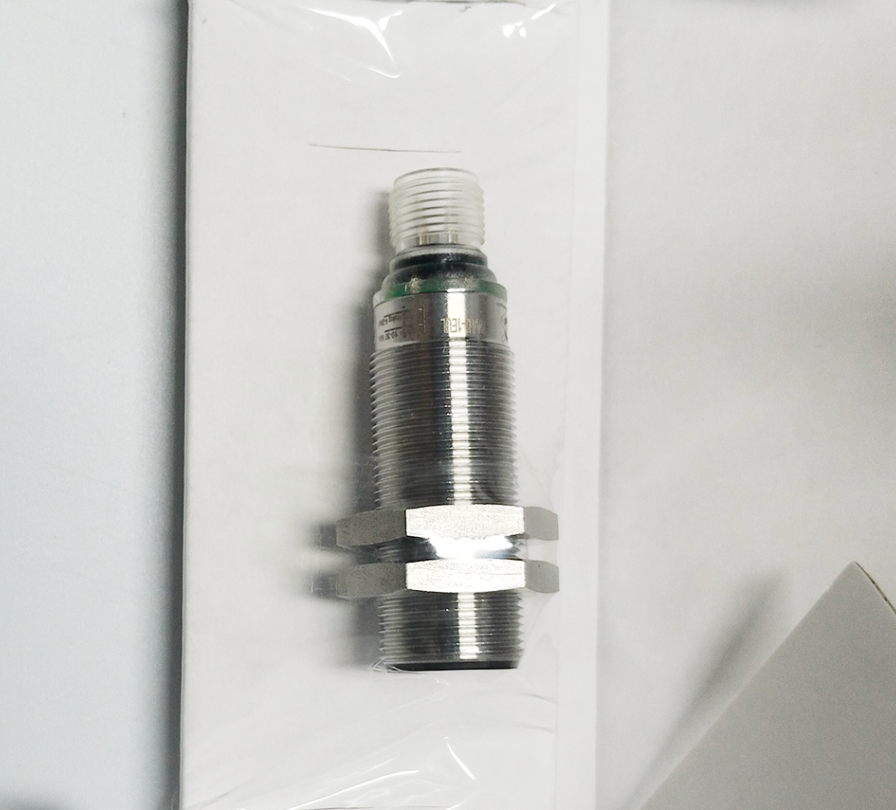
III. Control and Interface Module
Main Control Unit: Contemporary ultrasonic sensors predominantly employ embedded microcontrollers responsible for timing control, algorithmic computation, and system coordination. Advanced products integrate digital signal processors (DSP) to implement sophisticated echo analysis and multi-target recognition capabilities.
Communication Interfaces: These provide data exchange pathways with host systems, commonly available in the following formats:
-
Analog outputs (4-20 mA current loops, 0-10 V voltage)
-
Digital interfaces (RS-485, CAN bus, IO-Link)
-
Discrete outputs (NPN/PNP transistor outputs)
Configuration System: Through teach-in buttons, DIP switches, or software parameter settings, operational parameters such as detection range, response time, and output modes can be adjusted to accommodate diverse application scenarios.
IV. Structural and Protective Components
Resonant Cavity: An acoustic cavity constructed from metallic or polymeric materials, utilized for acoustic impedance matching, beam direction focusing, and internal component protection. Cavity design directly influences beam angle and detection coverage.
Housing and Sealing: Industrial-grade sensors employ ABS, PBT, or stainless steel enclosures, combined with O-ring seals to achieve IP67/IP68 protection ratings, ensuring adaptability to humid, dusty, and corrosive environments.
Temperature Compensation Elements: Thermistors or integrated temperature sensors monitor ambient temperature in real-time, correcting measurement errors resulting from sound velocity variations, thereby ensuring precision stability across the entire temperature range.
V. Auxiliary Functional Modules
Dead Zone Suppression Circuitry: Addressing the close-range dead zone (typically 5-20 cm) caused by transducer ringing, damping materials or electronic blanking techniques are employed to minimize dead zone extent.
Automatic Gain Control (AGC): Automatically adjusts amplification gain based on echo intensity, ensuring reliable detection of targets at varying distances.
Multi-Echo Processing: Advanced sensors possess the capability to analyze multiple echo signals, enabling penetration of transparent media or recognition of complex-shaped objects.
Technological Development Trends
With the advancement of microelectromechanical systems (MEMS) technology, miniaturized ultrasonic sensors (such as MEMS microphone arrays) are emerging. These employ silicon-based piezoelectric materials, offering advantages including compact size, reduced cost, and ease of integration. Simultaneously, the integration of time-of-flight (ToF) chip technology with ultrasonic methodologies, combined with the incorporation of artificial intelligence algorithms, is driving ultrasonic sensors toward higher precision and enhanced intelligence.
In conclusion, the ultrasonic sensor constitutes a precision system integrating acoustics, electronics, materials science, and control technology. The optimized design and coordinated operation of these core components determine its extensive application value across industrial automation, automotive electronics, medical equipment, smart home systems, and numerous other fields.


