Sensors are indispensable core electronic components in various mechanical equipment, household appliances, industrial production lines, and even smart wearable devices. Among them, temperature sensors are one of the most widely used categories, and together with Hall sensors, they form the basic components for sensing physical quantities. Next, we will systematically sort out the diverse applications of temperature sensors.
Temperature sensors play a vital role in ensuring product quality, improving production efficiency, saving energy consumption, guaranteeing production safety, and even promoting the high-quality development of the national economy. Their working principle is to realize indirect temperature measurement by capturing the physical characteristics of objects that change with temperature. Since the characteristics of many materials and components vary with temperature fluctuations, a wide variety of materials can be used to manufacture temperature sensors, covering metals, semiconductors, ceramics, polymer materials and other categories.
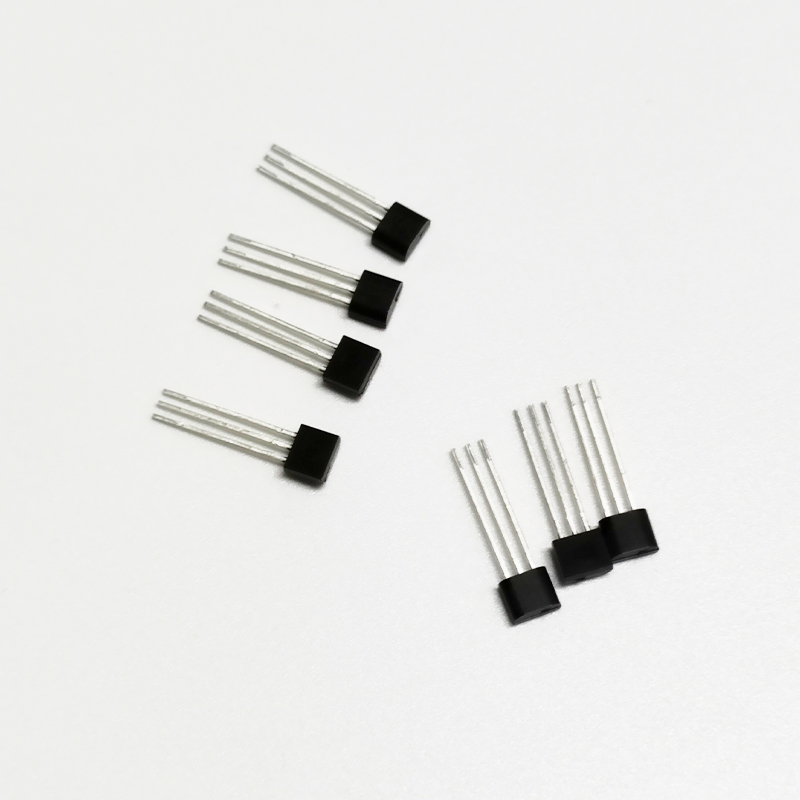
From the perspective of specific application scenarios, the applications of temperature sensors are mainly concentrated in the following aspects:
Industrial Production Process Control
In metallurgy, chemical engineering, machinery manufacturing and other fields, temperature is a core parameter determining the stability of production processes. For example, in iron and steel smelting, temperature sensors are required to monitor the furnace temperature in real time to ensure the crystallization quality of steel; in chemical reaction kettles, accurate temperature monitoring can prevent reaction runaway, ensure production safety, optimize reaction efficiency and reduce energy loss.
Intelligent Control of Household Appliances
In household appliances such as refrigerators, air conditioners, electric water heaters and ovens, temperature sensors are the core components for intelligent temperature control. Air conditioners adjust the compressor operating frequency through indoor and outdoor temperature sensors, balancing cooling effect and energy saving; electric water heaters rely on temperature sensors to accurately control water temperature, avoiding overheating or insufficient temperature, and improving comfort and safety.
Energy Management and Energy Conservation & Emission Reduction
In heating systems, power equipment, new energy vehicles and other scenarios, temperature sensors can monitor the operating temperature of equipment in real time to help optimize energy distribution. For example, central heating systems adjust the supply water temperature through temperature sensors to avoid energy waste caused by excessive heating; the Battery Management System (BMS) of new energy vehicles relies on temperature sensors to monitor the temperature of battery packs, preventing potential safety hazards caused by overheating and extending battery life.
Medical Health and Life Monitoring
In thermometers, incubators, and medical diagnostic equipment, temperature sensors are responsible for accurately sensing human body or ambient temperature. For example, electronic thermometers use NTC thermistors to quickly respond to body temperature changes for efficient temperature measurement; neonatal incubators maintain a constant temperature and humidity environment through multiple sets of temperature sensors to protect the life and health of premature infants.
Environmental Monitoring and Meteorological Forecasting
In weather stations, environmental monitoring stations and agricultural greenhouses, temperature sensors are basic equipment for collecting environmental data. Meteorological departments monitor atmospheric temperature changes through distributed temperature sensor networks to provide data support for weather forecasting and climate research; agricultural greenhouses rely on temperature sensors to link ventilation and irrigation systems, creating a suitable temperature environment for crop growth and improving crop yield and quality.
Automotive Electronics and Traffic Safety
In automotive engine management systems, air conditioning systems and battery systems, temperature sensors are the key to ensuring safe vehicle operation. The engine coolant temperature sensor monitors water temperature in real time to avoid overheating damage to the engine; the in-car temperature sensor provides data for the air conditioning system, improving driving comfort, and assists defogging and defrosting functions to ensure driving safety.
Temperature changes detected by temperature sensors will trigger changes in multiple physical parameters, including thermal expansion, resistance variation, capacitance variation, electromotive force (thermocouple), magnetic properties, frequency fluctuation, optical characteristics and thermal noise. With the continuous development of industrial production and technology, new types of temperature sensors are constantly emerging, such as micro-sensors based on MEMS technology and optical fiber temperature sensors, further expanding their application boundaries. However, it should be noted that due to the extremely wide range of temperature measurement in industrial and agricultural production, from hundreds of degrees Celsius below zero to thousands of degrees Celsius above zero, temperature sensors made of different materials can only work stably in specific temperature ranges, so selection should be made according to actual scenarios.


