In modern factories, countless pipelines crisscross like blood vessels in the human body, transporting water, oil, gas, steam, and various other media. This raises an important question: How much liquid is flowing through these pipes? Is the flow rate fast or slow? Are there any leaks or blockages? To answer these questions, we rely on a critical industrial instrument: the flow transmitter.
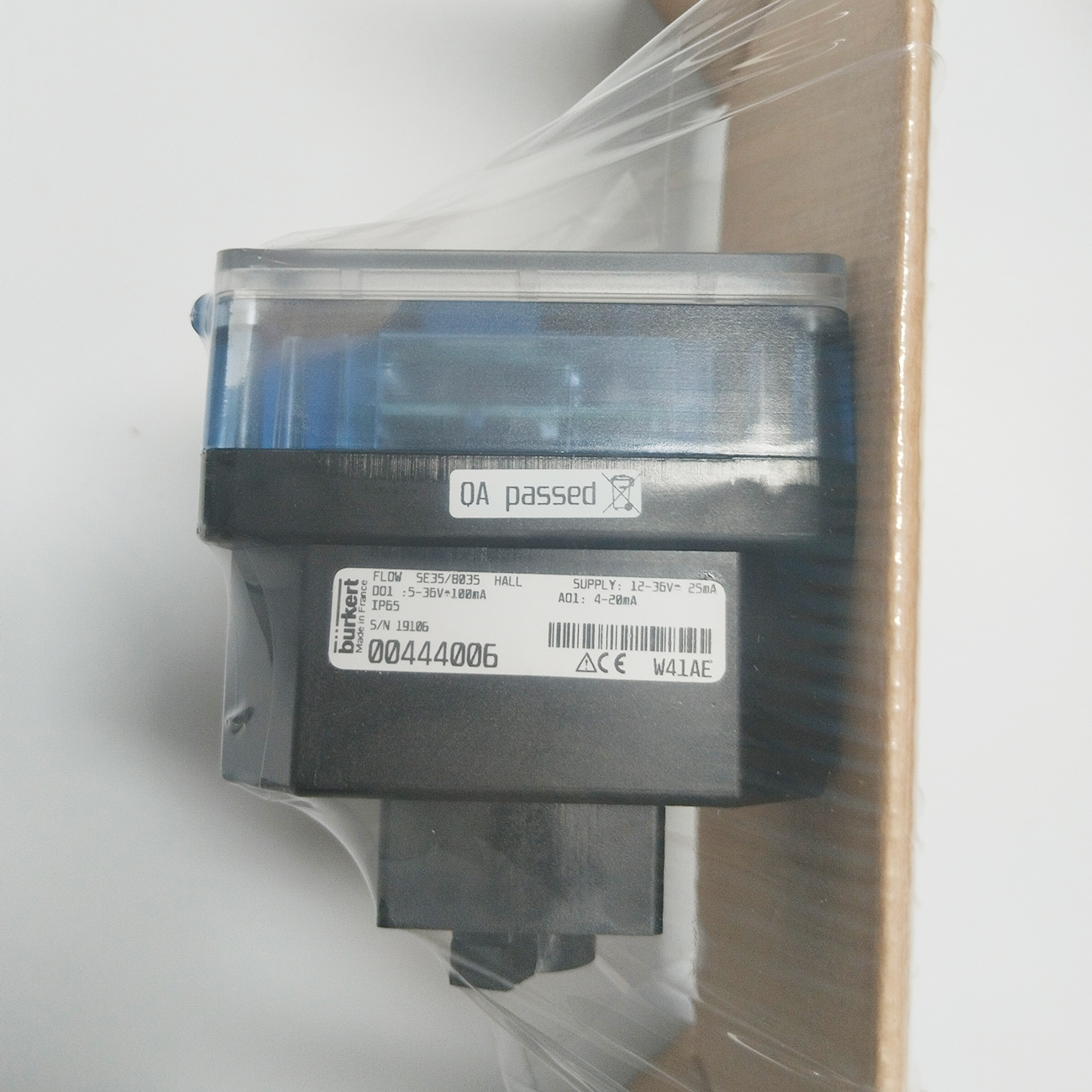
I. What Exactly Is a Flow Transmitter?
To understand a flow transmitter, let's start with a relatable analogy.
Imagine the water meter in your home. Its job is to tell you how many tons of water you've used this month. But a regular water meter only shows numbers on-site. If you're in the living room and the meter is in the basement, you can't run down to check it every time. Now, imagine a device that could "translate" the meter reading into an electrical signal and send it to your phone via telephone line or wireless network, allowing you to monitor your water usage anytime and automatically alerting you when flow becomes abnormal. This device essentially performs the same function as a flow transmitter.
A flow transmitter, in simple terms, is an instrument that measures the flow of media inside a pipeline and converts the measurement results into standard signals for transmission. It typically consists of two parts: a sensor responsible for "sensing" the flow, and a transmitter unit responsible for "translating and communicating."
The sensor acts as the "eyes" or "ears" of the transmitter. It directly contacts the media inside the pipeline, sensing physical quantities such as flow velocity, pressure differential, or vortex frequency. However, the raw signals detected by sensors are often weak and come in various forms—some are pulses, some are differential pressure, and some are frequency. These signals cannot be directly interpreted by distant control rooms.
This is where the transmitter unit comes into play. It amplifies the raw signals collected by the sensor, performs linearization processing, applies temperature compensation, and ultimately converts them into universally recognized standard signals in the industrial world. The most common are 4-20 mA current signals or 0-10 V voltage signals. Why 4-20 mA? Because current signals have strong anti-interference capabilities, making them suitable for long-distance transmission. Additionally, 4 mA represents zero point while 20 mA represents full scale. If the line breaks (0 mA), the control system can immediately determine it's a broken wire fault rather than actual zero flow.
Modern intelligent flow transmitters can also output digital signals, such as through HART protocol, Modbus, or Profibus communication methods, transmitting multiple parameters including flow rate, temperature, and pressure to the host computer simultaneously, enabling remote monitoring and intelligent diagnostics.
II. How Does a Flow Transmitter Work?
Flow transmitters are not a single product but rather a "large family," with different members operating on different principles. For easy understanding, let's introduce several of the most common types.
Electromagnetic flow transmitters can be compared to a "magnetic scale." Inside the measurement tube, there is a magnetic field. When conductive liquids (such as water, sewage, or acids/bases) flow through, they act as conductors cutting through magnetic field lines. According to Faraday's law of electromagnetic induction, a weak voltage signal is generated in the liquid. The faster the flow velocity, the greater the voltage. The transmitter measures this voltage to calculate the flow rate. The biggest advantage of this transmitter is that it has no moving mechanical parts, so it doesn't wear out and isn't affected by impurities in sewage. However, it can only measure conductive liquids; it cannot measure pure water, oils, or gases.
Vortex flow transmitters operate on a principle somewhat like "counting waves." In the center of the pipeline, there is a bluff body (also called a vortex shedder). When fluid passes by, vortices are alternately generated on both sides, similar to the whirlpools formed when river water flows around bridge piers. The faster the flow velocity, the higher the vortex generation frequency. The transmitter calculates the flow rate by detecting the vortex frequency. It is suitable for measuring steam, gas, and liquid, with a simple structure and high reliability.
Ultrasonic flow transmitters are more like "measuring distance by listening to sound." A pair of ultrasonic transducers is installed on the outer wall or inside of the pipeline—one transmits ultrasonic waves, and the other receives them. When fluid flows, the sound wave propagation speed increases in the downstream direction and decreases in the upstream direction. The transmitter calculates the flow velocity by computing this "time difference." Its advantage is that it can be "clamped" onto the outside of the pipeline for measurement without cutting into the pipe, making it particularly suitable for large-diameter pipelines or situations where production cannot be stopped.
Differential pressure flow transmitters are the most historically established and widely applied type. A throttling device (such as an orifice plate) is installed in the pipeline. When fluid flows through, a pressure differential is created before and after the orifice plate—the faster the flow velocity, the greater the pressure difference. The transmitter calculates the flow rate by measuring this differential pressure. Although simple in structure and low in cost, it does create some pressure loss.
Mass flow transmitters (Coriolis type) are the "aristocrats" of the family. They utilize the Coriolis force principle to directly measure the mass flow rate of the fluid rather than the volumetric flow rate. This means that regardless of changes in temperature, pressure, or density, they can provide accurate measurement results. They are indispensable for petroleum trade settlement, precise chemical batching, and other applications requiring high accuracy.
III. Where Are Flow Transmitters Used?
Flow transmitters are applied in virtually all industries involving fluid transportation. It's fair to say that wherever there are pipelines, flow transmitters may be needed.
1. Municipal Water Supply and Wastewater Treatment
This is the scenario most accessible to ordinary people. Municipal water treatment plants use flow transmitters to monitor raw water intake, purified water output, and water supply volumes in various district pipelines to ensure stable residential water supply. At wastewater treatment plants, flow transmitters monitor influent flow, flow at each treatment stage, and final discharge volume. Electromagnetic flow transmitters excel in these applications because sewage typically contains various impurities, and electromagnetic types have no mechanical parts, making them resistant to clogging and wear.
2. Petrochemical Industry
Refineries and chemical plants are "heavy users" of flow transmitters. From crude oil entering the plant to distillation, cracking, refining, and finally to finished product dispatch, every stage requires precise measurement. In chemical production, various raw materials need to be mixed in strict proportions, and flow transmitters serve as the "gatekeepers" ensuring these proportions. For example, in plastics production, the flow rates of monomers such as ethylene and propylene must be precisely controlled; otherwise, product quality will suffer. Mass flowmeters, vortex flowmeters, and differential pressure flowmeters are commonly used here.
3. Power and Energy
Thermal power plants require large quantities of steam to drive turbine generators. The steam flow rate from boilers directly affects power generation efficiency and unit safety. Vortex flow transmitters and differential pressure flow transmitters are the mainstays of steam measurement. In natural gas transmission, from long-distance pipelines to city gate stations, and then to industrial users and residential communities, flow transmitters handle trade settlement and gas consumption monitoring, directly affecting the "bottom line" of enterprises and residents.
4. Food and Pharmaceutical Industries
These two industries have extremely high hygiene requirements. Milk, beer, and juice require precise flow control during production to ensure accurate filling volumes while avoiding waste. The pharmaceutical industry is even more demanding; the precision of drug formulation directly affects drug efficacy and safety. Sanitary flow transmitters are used here, featuring stainless steel construction with smooth, crevice-free surfaces that can withstand high-temperature steam cleaning (CIP/SIP), ensuring no contamination of the media.
5. Heating, Ventilation, and Air Conditioning (HVAC)
In large shopping malls, office buildings, and hospitals, the flow of chilled water and cooling water in central air conditioning systems needs real-time monitoring and regulation. Flow transmitters help systems automatically adjust pump speeds and valve openings based on actual loads, ensuring comfort while saving energy. Ultrasonic flow transmitters are popular in these applications because they can be installed on the exterior of pipelines without damaging insulation layers, making installation convenient.
6. Metallurgy and Papermaking
In steel plants, the cooling water for blast furnaces and continuous casting machines must maintain adequate flow; otherwise, equipment will overheat and fail with catastrophic consequences. Paper mills need to precisely control the flow rates of pulp, white water, and various chemical additives to ensure proper paper basis weight, strength, and uniformity.
7. Environmental Monitoring
As environmental regulations become increasingly stringent, enterprise wastewater and exhaust gas emissions are subject to strict monitoring. Flow transmitters installed at discharge outlets work in conjunction with water quality analyzers and flue gas analyzers, uploading real-time data to environmental protection agencies and serving as the "electronic eyes" of environmental regulation.
IV. Selection and Usage Considerations
Although flow transmitters come in many varieties, several core factors must be considered during selection: what medium is being measured (conductivity, corrosiveness, viscosity), pipeline diameter, temperature and pressure range, required accuracy, whether explosion-proofing is needed, and whether installation space is adequate.
Additionally, installation location is crucial. Many flow transmitters require a certain length of straight pipe run before and after the device to ensure stable fluid flow and accurate measurement. If installed in locations with air bubbles, sediment, or strong vibrations, the measurement results will "lie."
V. Conclusion
Flow transmitters, though hidden deep within pipelines and working silently, are indispensable foundational components of modern industrial automation. They transform invisible, intangible fluid motion into precise numbers and signals, allowing engineers sitting in control rooms to monitor the "blood flow" of the entire factory. From residential water supply to aviation fuel, from pharmaceutical production to wastewater treatment, flow transmitters use their "intelligent perception" to safeguard the efficiency, safety, and fairness of industrial production.
The next time you see those densely packed pipelines in a factory, take a moment to consider—beside those elbows, valves, and pumps, there is likely a small flow transmitter working around the clock, doing its "flow translation" job 24 hours a day.


